INR vs USD: Rupee near 97/dollar; how TCS, Sun Pharma, Tata Steel, SRF may gain from weaker currency? Experts explain
INR vs USD: According to analysts, a weaker rupee is a clear macroeconomic headwind for India because the country remains heavily dependent on imported crude oil and several other commodities.
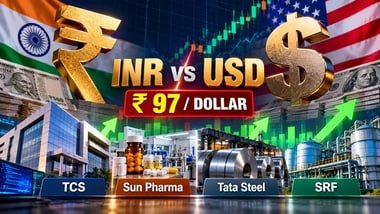
INR vs USD: The Indian rupee has come under sharp pressure, falling below the ₹97-per-Dollar level as a stronger US Dollar Index, elevated US Treasury yields and Brent crude prices staying above $100 a barrel weigh on the currency.Persistent foreign institutional investor outflows from Indian equities have added further pressure on the domestic currency and have also contributed to weakness in the broader equity markets.According to analysts, a weaker rupee is a clear macroeconomic headwind for India because the country remains heavily dependent on imported crude oil and several other commodities.“Rupee depreciation raises the landed cost of imports, increases the risk of imported inflation and can put additional pressure on corporate margins as well as the current account. In that sense, higher crude oil prices and a weaker rupee can reinforce each other and create an adverse feedback loop for the economy,” said Sugandha Sachdeva, Founder of SS WealthStreet.INR vs USD: Stocks likely to benefit from weak RupeeSeema Srivastava, Senior Research Analyst at SMC Global Securities, highlighted that for equity investors, a weakening domestic currency acts as a powerful catalyst for specific export-driven businesses, primarily because their revenues are realized in foreign currencies such as US Dollars, Euros, or British Pounds—while their core operational expenses, manufacturing overheads, and employee salaries remain denominated in Rupees.Meanwhile, Sachdeva said that export-oriented sectors can benefit from rupee depreciation, particularly companies that earn a significant share of their revenues in US dollars while incurring a substantial portion of their costs in rupees.IT sector stocksThe Information Technology (IT) sector stands as one of the primary beneficiaries of this currency shift. Tech majors like TCS, Infosys, HCL Technologies, Wipro, and Tech Mahindra derive the vast majority of their top-line earnings from overseas markets.“As the rupee slides, every incremental currency unit gained upon converting foreign billings directly expands their operating margins, bolstering profitability even when volume growth remains steady,” said Srivastava.Pharma stocksAccording to Srivastava, pharmaceutical giants with a robust footprint in regulated international markets—including Sun Pharmaceutical Industries, Dr. Reddy's Laboratories, Cipla, Divi's Laboratories, and Lupin reap substantial foreign exchange gains, as dollar-denominated export sales translate into higher rupee inflows.Pharmaceutical companies could also emerge as beneficiaries, particularly those with a strong export presence and substantial exposure to North America and other overseas markets. With a significant share of their revenue generated in foreign currencies, a weaker rupee can boost the value of overseas earnings and support profitability. Companies with predominantly domestic cost structures and lower dependence on imported inputs are likely to benefit more from this currency tailwind.Textile stocksTextile exporters such as Welspun Living, KPR Mill, and Trident Limited also benefit through improved pricing power and volume traction when competing globally, according to Srivastava.Metal and mining stocksGlobally traded metal and mining corporations like Hindalco Industries, Vedanta, and Tata Steel gain from higher rupee realizations since commodity pricing benchmarks are internationally tied to the US dollar.Auto component manufacturing stocksAccording to Sachdeva, selected auto-component manufacturers and engineering exporters can benefit from currency weakness, particularly those with substantial export revenues.“A weaker rupee can improve revenue realisation and export competitiveness, potentially supporting margins, provided that imported raw-material and component costs do not rise disproportionately,” she added.Disclaimer: This story is for educational purposes only. The views and recommendations above are those of individual analysts or broking companies, not Mint. We advise investors to check with certified experts before making any investment decisions.
Source: Mint Markets
Disclaimer: This article is for general information and does not constitute investment, tax or legal advice. Markets and rates change; please verify with official sources or a qualified professional before you act.